Why I Wrote a Word Love Letter to New York City and why the world's most written-about city still has stories left to tell.
There's a moment, if you've ever walked across the Brooklyn Bridge at dusk, when the Manhattan skyline catches the last light and turns to gold. The towers glow. The cables hum overhead. And for just a second, you feel what Henry Hudson must have felt when his little ship rounded the bend of the Narrows in 1609 — the shock of possibility.
That feeling is why *Discover New York: A History of the World's Greatest City* exists.
Not Another Textbook
Let's be honest: there are hundreds of New York history books already. Academic tomes. Coffee table books. Tourist guides. So why another one?
Because most of them miss the point.
New York's history isn't a list of dates and building heights. It's a *story* — messy, violent, beautiful, and ongoing. It's the story of how a tiny Dutch trading post where 500 people spoke 18 different languages became the most important city on Earth. It's the story of people: desperate immigrants and ruthless tycoons, corrupt politicians and visionary engineers, jazz musicians and punk rockers and street artists who turned decay into genius.
That's the book I wanted to write. Not a reference work — a narrative. A story you can read in a weekend that leaves you seeing the city differently forever.
Four Centuries in Ten Chapters
The book covers the full sweep of New York history — from the Lenape people who called Manhattan home for thousands of years, through the Dutch and English colonial eras, the Revolution, the great immigration waves, the Gilded Age, two World Wars, the near-death experience of the 1970s, the trauma of September 11th, and the resilience of a city that has survived everything the world has thrown at it.
Each chapter focuses on an era, but more importantly, each chapter focuses on *people* and *moments*:
- Peter Stuyvesant stomping around on his wooden leg, trying to impose order on a town that refused to behave
- Alexander Hamilton dreaming up American capitalism in a Wall Street counting house
- The 146 garment workers who died in 18 minutes at the Triangle Shirtwaist Factory — and the woman who watched from the street and went on to create Social Security
- The kids in the South Bronx who invented hip-hop in the same burning neighborhoods the city had abandoned
These aren't footnotes. They're the point.
Illustrated with Original Sketches
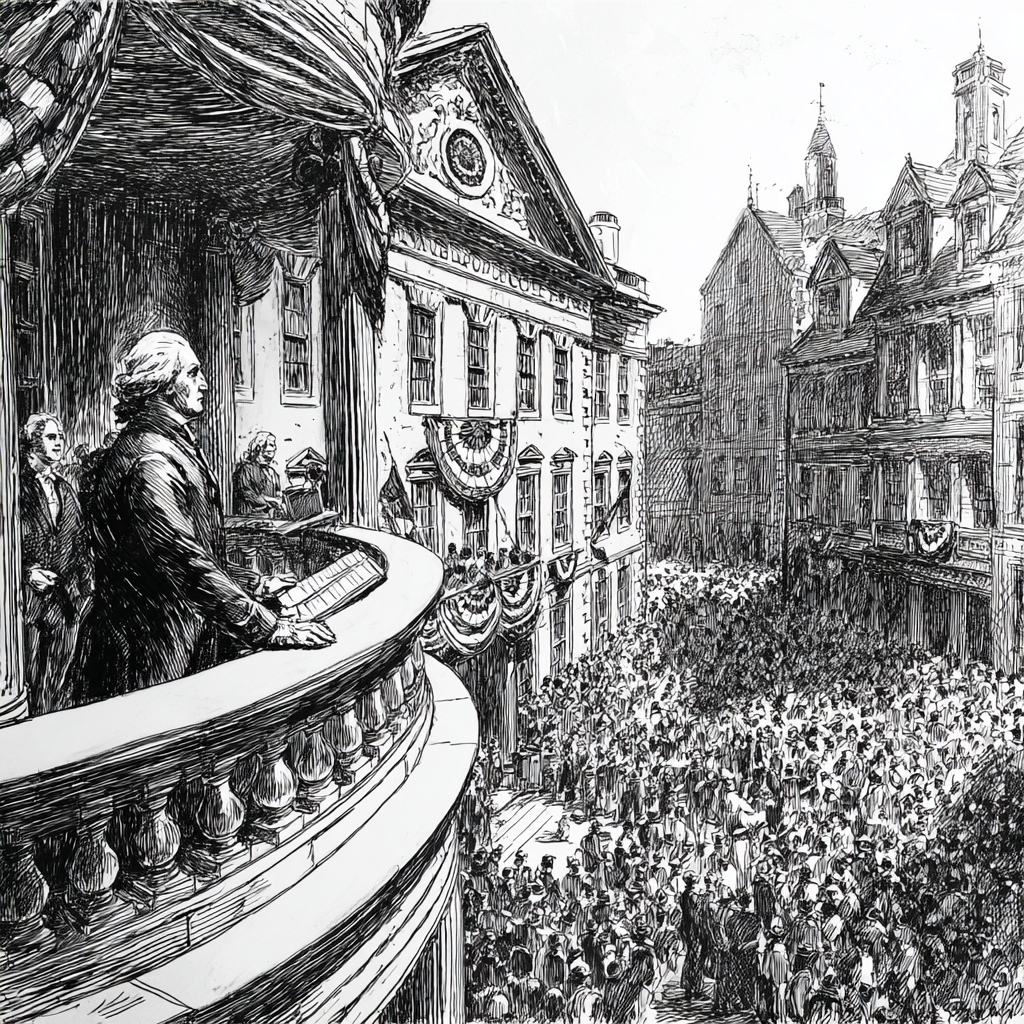
The book includes 20 pen-and-ink sketches — maps, architectural drawings, street scenes, and portraits that bring each era to life. From a map of Lenape Mannahatta showing the island's original forests and trails, to an empty Times Square during the 2020 lockdown, the illustrations are designed to pull you into the moment.
They're not photographs. They're interpretations — the kind of sketches a historian might draw in a notebook while standing on a street corner, imagining what used to be there.
Part of Something Bigger
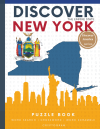
Discover New York: A History of the World's Greatest City is the first book in The Big Apple series, alongside our *Discover New York — The Empire State word puzzle book". The idea is simple: read the history, then test what you've learned. Or solve the puzzles first, then discover the stories behind the answers.
Each book works perfectly on its own. But together, they're a complete New York experience — whether you're preparing for a trip, recovering from one, or just fascinated by how one small island became the center of the world.
Who Is This Book For?
- *ravelers heading to New York who want more than a restaurant guide
- History lovers who prefer narrative over textbooks
- NYC residents who walk past historic sites daily without knowing their stories
- Puzzle fans who enjoyed our word puzzle book and want the deeper context
- Anyone who has ever stood on a New York sidewalk and wondered: *how did all of this happen?*
The Question That Drove the Book
Every city has a founding myth. Rome has Romulus and Remus. London has the Romans. Paris has the Gauls.
New York's founding myth is simpler and more honest: *someone saw a good harbor and wanted to make money*.
That commercial impulse — pragmatic, democratic, open to anyone with something to sell — is the thread that runs through four centuries of New York history. It's why the Dutch tolerated eighteen languages in a town of five hundred. It's why immigrants kept coming even when the tenements were killing them. It's why Wall Street rose and fell and rose again. It's why the city keeps reinventing itself when every other great metropolis clings to its past.
New York doesn't cling. New York builds, destroys, and builds again. And somehow, in that endless cycle of creation and destruction, it produces more art, more music, more ideas, and more sheer human energy than anywhere else on Earth.
That's the story this book tells. I hope you'll read it.